

SAHSOL Contributes to UNDP’s Huqooq-e-Pakistan II Programme to Strengthen Human Rights Education
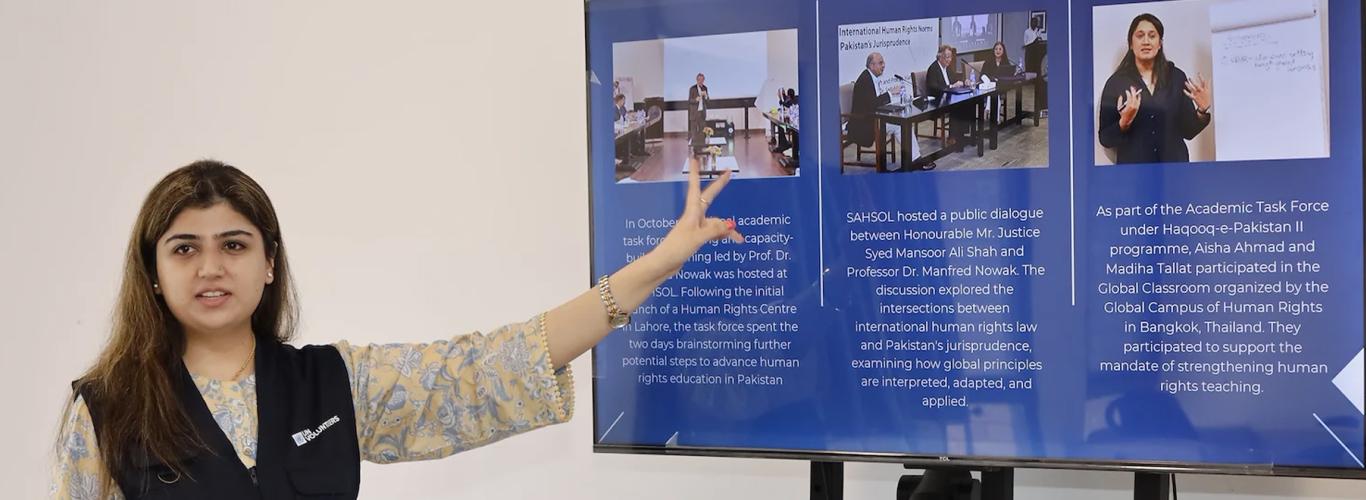


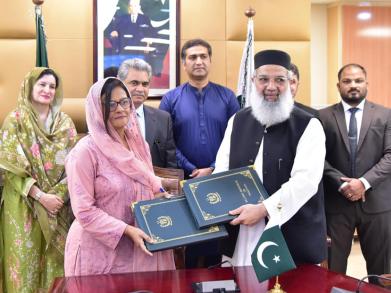
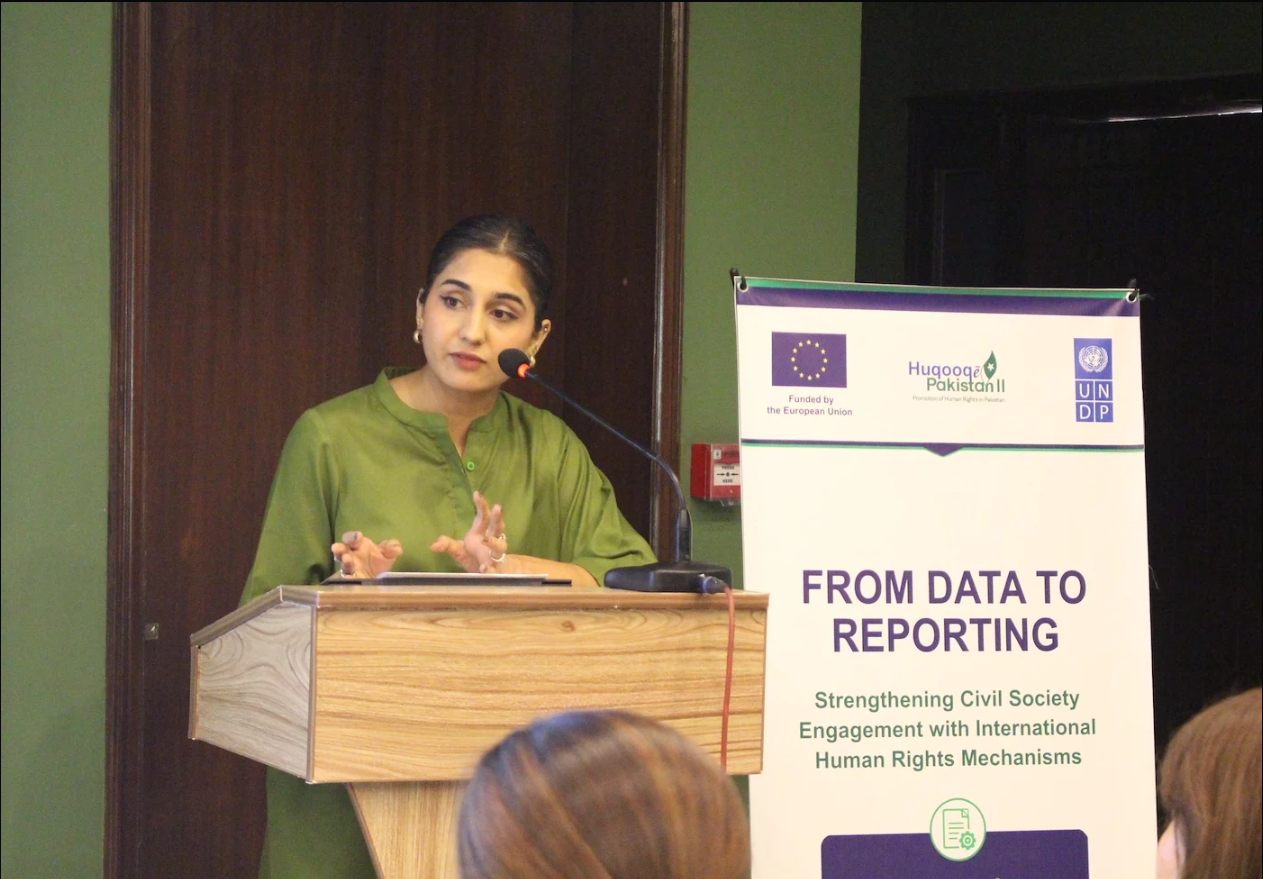
Shaikh Ahmad Hassan School of Law (SAHSOL), LUMS, is contributing to the Huqooq-e-Pakistan II programme, implemented by UNDP with support from the European Union, as a partner institution advancing human rights education in Pakistan. As part of this collaboration, Dr. Aisha Ahmad, Assistant Professor at SAHSOL and a member of the Huqooq-e-Pakistan II Academic Task Force, contributes academic expertise to the programme. Alina Ali, Research Coordinator (Human Rights Education) with UNDP and stationed at LUMS, supports the programme’s engagement and activities at the partner institution. The collaboration brings together academic and development-sector perspectives to strengthen students’ understanding of human rights, international standards, equality, and social justice. The UNV feature, A Right Unknown Is a Right at Risk, highlights this collaborative effort and the importance of strengthening human rights education among young people in Pakistan.
Most people assume that human rights matter only when they are violated. But what if the real challenge begins much earlier? What if people do not know the human rights they already have?
“If you talk about the nikah nama (marriage certificate) for instance, does every woman know what rights she has within that certificate?” asks UN Volunteer Jahanoor Sandhu.
The question cuts to the heart of a larger issue.
In Pakistan, human rights are guaranteed by law and by the Constitution. Yet for many, those rights remain distant, unfamiliar, or simply out of reach. The gap is not always between citizens and institutions. Sometimes it is between legal protections and public awareness.
That is the challenge driving the United Nations Development Programme (UNDP) Decentralization, Human Rights and Local Governance (DHL) project.
Across Pakistan, it seeks to strengthen the institutions and systems responsible for promoting, protecting, and upholding human rights, while increasing private sector leadership in advancing human rights and gender equality.
To achieve these objectives, the project collaborates with a wide range of government, private, academic, and civil society partners at the national, sub-national, and communal levels to provide technical, legislative, policy, and digitization support.
The premise is simple: human rights do not become real because they are written into law. They become real when people understand them, claim them and see them reflected in their daily lives.
And often, that journey begins in a classroom.
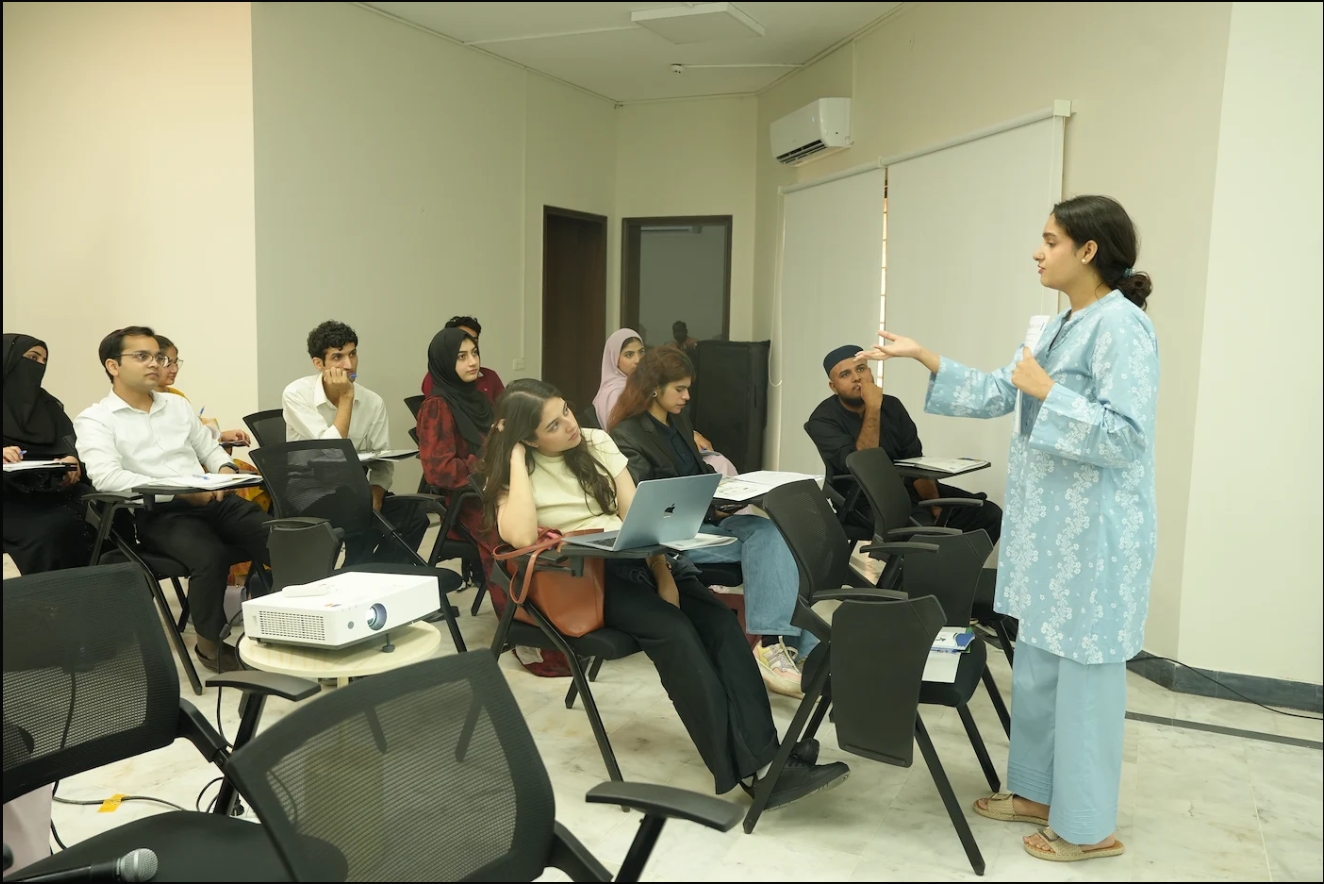
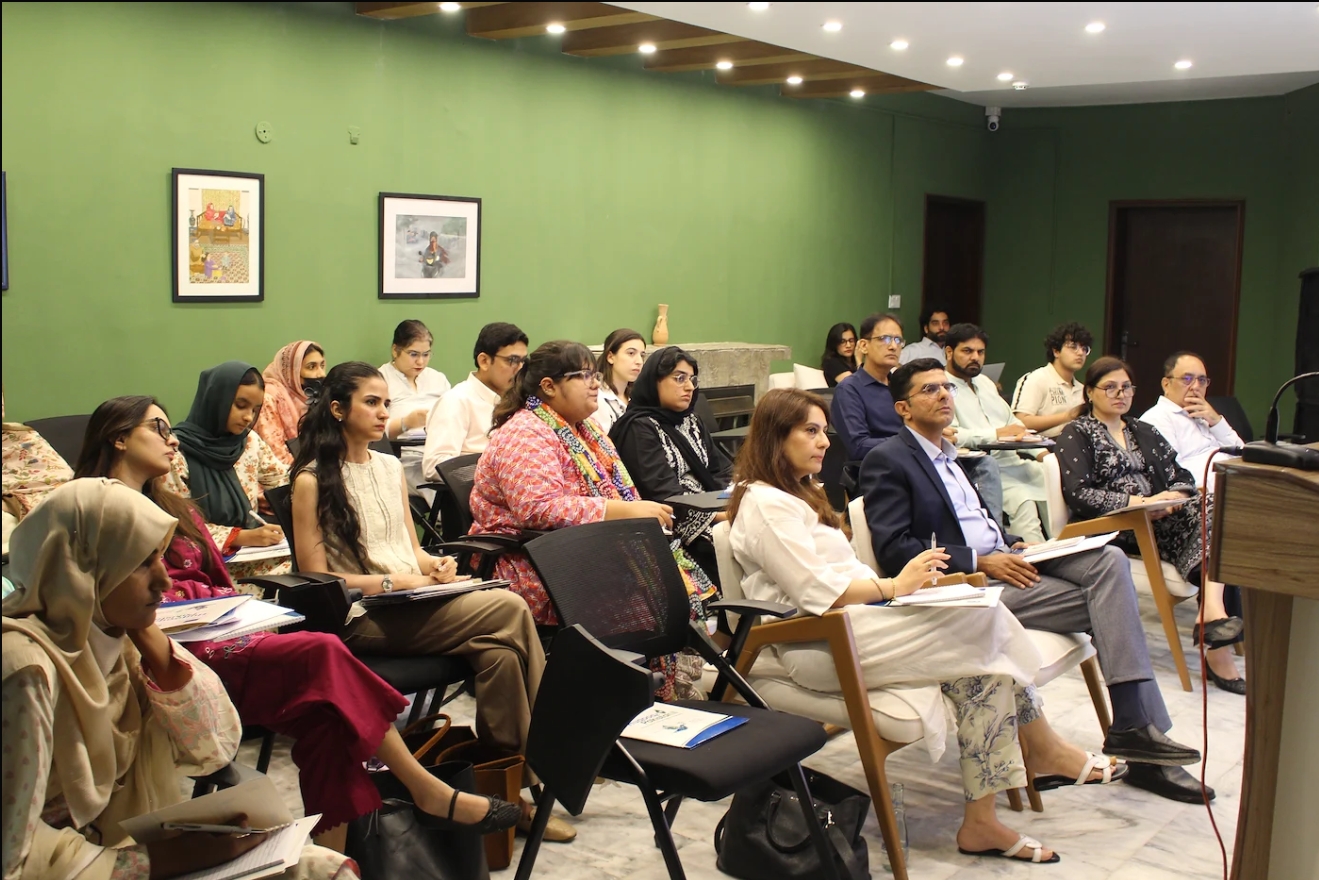
In lecture halls across Lahore, students are discussing questions that many had never encountered in formal education: digital rights, gender equality, child labour, freedom of expression, and the protections already guaranteed to them under Pakistani law.
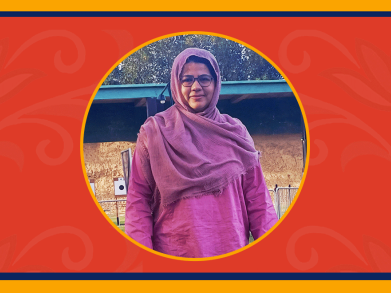
Helping to lead some of those conversations is Alina Ali. Born and raised in Lahore, Alina serves as a UN Volunteer Research Coordinator for Human Rights Education at the Lahore University of Management Sciences (LUMS) Shaikh Ahmad Hassan School of Law (SAHSOL). Her work falls under Huqooq-e-Pakistan II (Rights for Every Pakistani), an initiative launched in 2024 that uses education as a pathway to building a more informed and engaged society.

“Young people today are not what they used to be back in the day. They want change and they want to be heard. The next generation does not lack ambition,” says Alina.
She adds, "I am especially encouraged by the way Huqooq-e-Pakistan II invests in young people. By supporting human rights education, encouraging academic partnerships, and creating opportunities for students to engage with national and international experts, the programme helps prepare a new generation of Pakistanis to think critically about the challenges facing society.”
Dr. Aisha Ahmad, Faculty at the Law School (SAHSOL), spoke of the project’s impact at LUMS: “Ever since we began our partnership with the UN, particularly in promoting human rights and human rights education, we have noticed a great deal of immediate, short-term benefits, as well as long-term benefits. In terms of the long-term institutional benefits, the importance of developing a human rights consciousness among students is of vital importance in any country where civil liberties, freedom, and rights in general, as well as social and economic justice, are at the top of mind for anyone growing up in a country like Pakistan.”
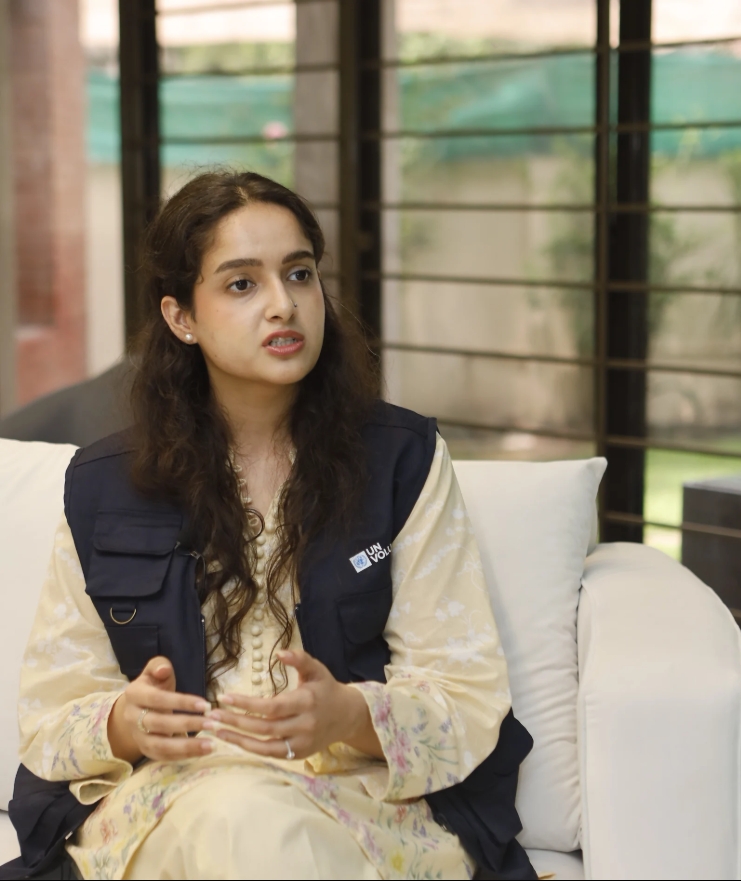
Across the city, Jahanoor Sandhu another national UN Volunteer from Lahore, is working toward the same goal from a different setting. Based at the Shaista Ikramullah Centre for Human Rights, she is a Human Rights Coordinator and focuses on building awareness beyond academia and helping people understand human rights that many do not realize they already possess.
The discovery has been eye-opening.
“Through human rights education, we can change the next generation’s mindset about human rights. The awareness of human rights has not always been there. The rights are ensured to us within the Constitution of Pakistan but does everyone know what these are?” she questions.
The Centre, which opened in early 2026, supports students, researchers, academics, civil society actors, and institutions working on human rights. For Jahanoor, human rights education is not an abstract discussion. It is about equipping people to recognize injustice when they encounter it and giving them the confidence to respond.
“Even if only 5 students out of 40 learn something about human rights and can prevent something like child labour and minimum marriage age, then the work we set off to do has actually done something and that’s meaningful change for me in a nutshell.”
The conversation increasingly extends into digital spaces as well. Through trainings and awareness sessions at public universities in Lahore, students examine issues ranging from cyberbullying to cybercrime, while learning about the protections and rights that exist online.
“We are developing 6 courses, the first of which has been delivered. Furthermore, as for trainings overall, we at the center have trained over 300 individuals—this includes students, academia, civil society and government officials," notes Jahanoor.
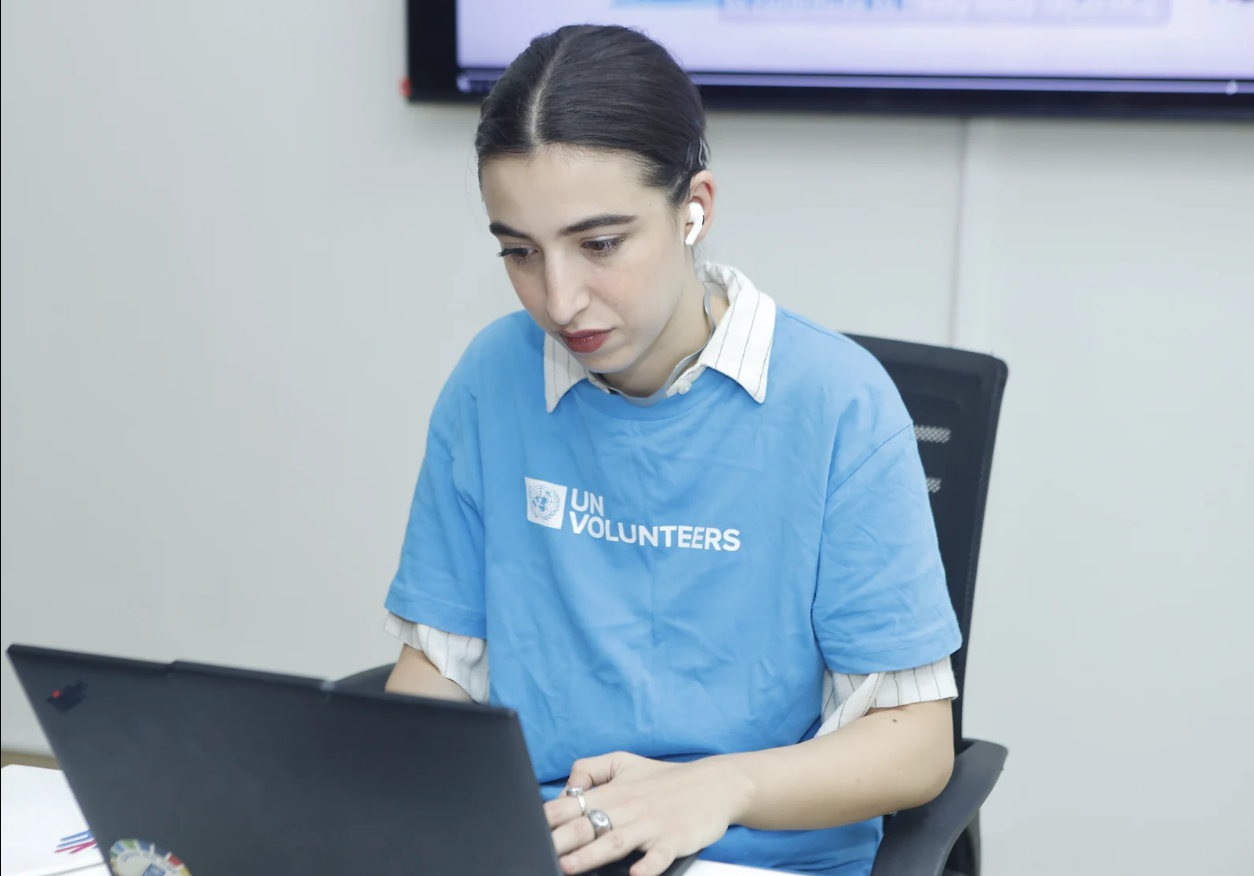
For Chiara Maria Murgia, an international UN Volunteer from Italy, those discussions reveal both the local realities of Pakistan and the universal nature of human rights. “It allows me to see how different UN agencies operate in different countries. Getting exposure to another country’s development context is also important if you want to progress in an international development career. Especially working in human rights and being on the ground in Pakistan shows me how cultural perspectives are important and need to be integrated.”
Chiara has witnessed what happens when human rights move from theory into practice. Every workshop, classroom discussion and partnership has offered a different perspective on how awareness can be turned into action. “Being the Academic Coordinator of human rights education centre, the first of its kind in Lahore, a city famous for its vibrant civil society ecosystem, has been both interesting and engaging at the same time,” she shares.
“Youth’s potential needs to be unleashed. Young people everywhere not only in Pakistan are demanding global justice, human rights protection, accountability, their voices need to be heard”, says Chiara Maria Murgia, international UN Volunteer in Lahore.
The stakes are particularly high in Pakistan, where nearly 6 out of every 10 people are young. The generation that will shape the country's future is already in classrooms, universities and online spaces today. Whether they understand their rights may influence not only their own opportunities, but the direction of society itself.
That is why human rights education is emerging as one of the most important frontiers of development work in the country. Not because it changes laws. Because it changes minds.
 |  |
 |  |
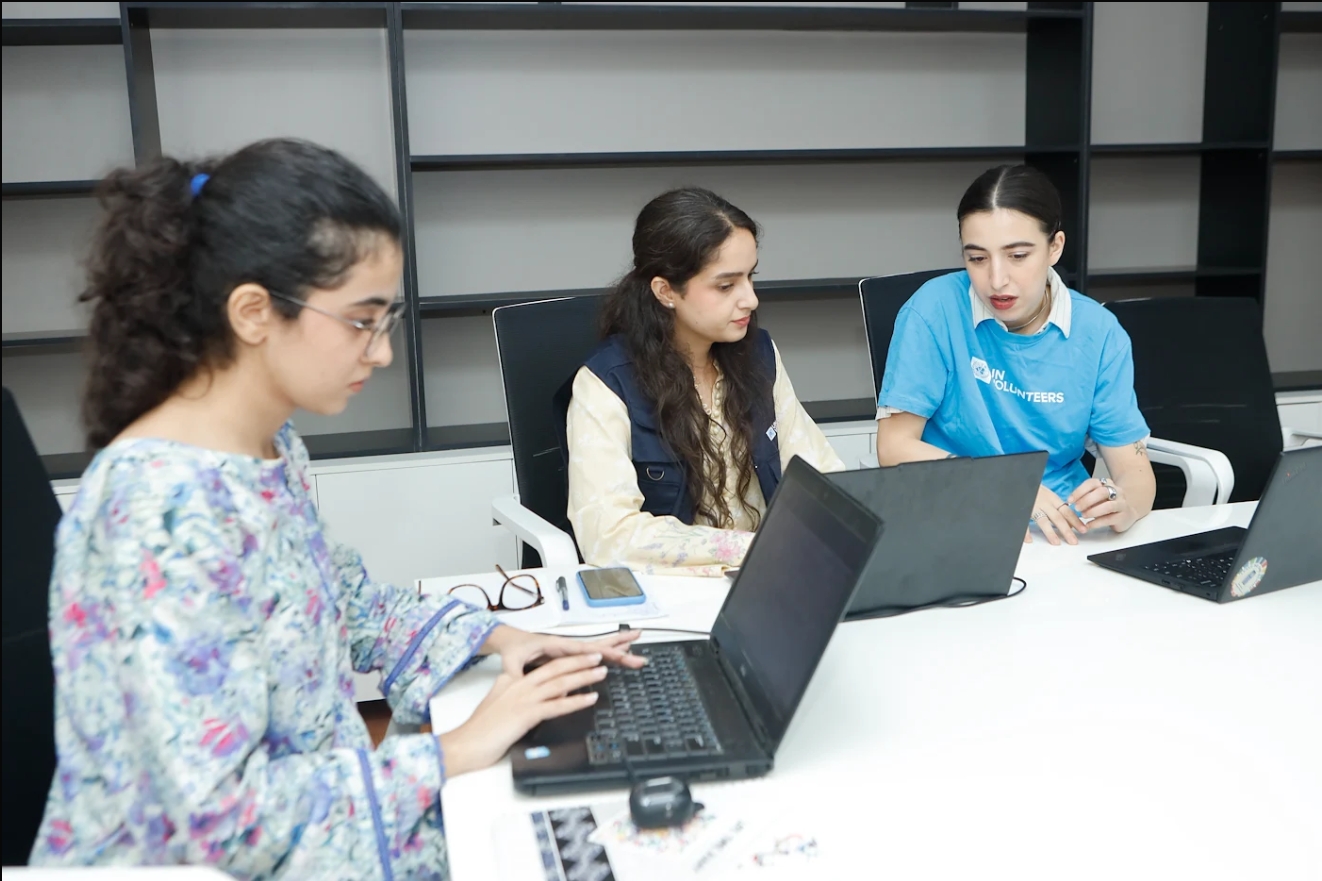
Behind these efforts stands a network of nearly 60 UN Volunteers across Pakistan.
In Lahore alone, Madiha Fareed coordinates around 15 UN Volunteers working through partner institutions to bring human rights education closer to the communities it serves.
A former UN Volunteer with the United Nations Office for the Coordination of Humanitarian Affairs (UNOCHA), Madiha is presently working as a Human Rights Officer with UNDP.
For Madiha, volunteerism is as much about personal growth as it is about impact. “A UN Volunteer assignment offers opportunities for intellectual development,” she says. “This project attracts not only young volunteers but also professionals who have a lot of experience.”
For Alina, the challenge facing young Pakistanis is not a lack of talent.
"Too many young people don't lack ambition. They lack access.” Access to education. Access to opportunities. Access to the knowledge that allows people to participate fully in society.
Because the greatest threat to human rights is not only that they are violated. It is that people may never realize they are entitled to them in the first place.
The larger impact of Huqooq-e-Pakistan II cannot be measured solely by the number of workshops held, students reached, or institutions engaged. Its deeper ambition is to help shape a generation that understands not only its freedoms, but its role in defending them for others.
Huqooq-e-Pakistan II is a European Union-funded initiative in partnership with the Government of Pakistan and UNDP, aimed at promoting, protecting, and fulfilling human rights across Pakistan—supported by national and international UN Volunteers.
The project's most important contribution may not be changing laws, policies, or institutions. It may be changing what happens when a young person discovers that something they thought was a privilege is, in fact, theirs by right.
That realization does more than raise awareness. It changes expectations. It changes confidence. It changes who speaks up, who participates, and who refuses to accept exclusion as inevitable.
In the end, Huqooq-e-Pakistan II is not simply teaching human rights. It is democratizing knowledge, turning information held by a few into understanding shared by many. Because people cannot claim what they do not know belongs to them. And when they do, they become far harder to ignore.
That is where volunteerism's power lies. Not only in serving communities, but in helping shift who has access to knowledge, who gets to participate, and whose voice shapes the future.