

LUMS National Workshop Explores New Role for Thermal Plants in Pakistan’s Clean Energy Future
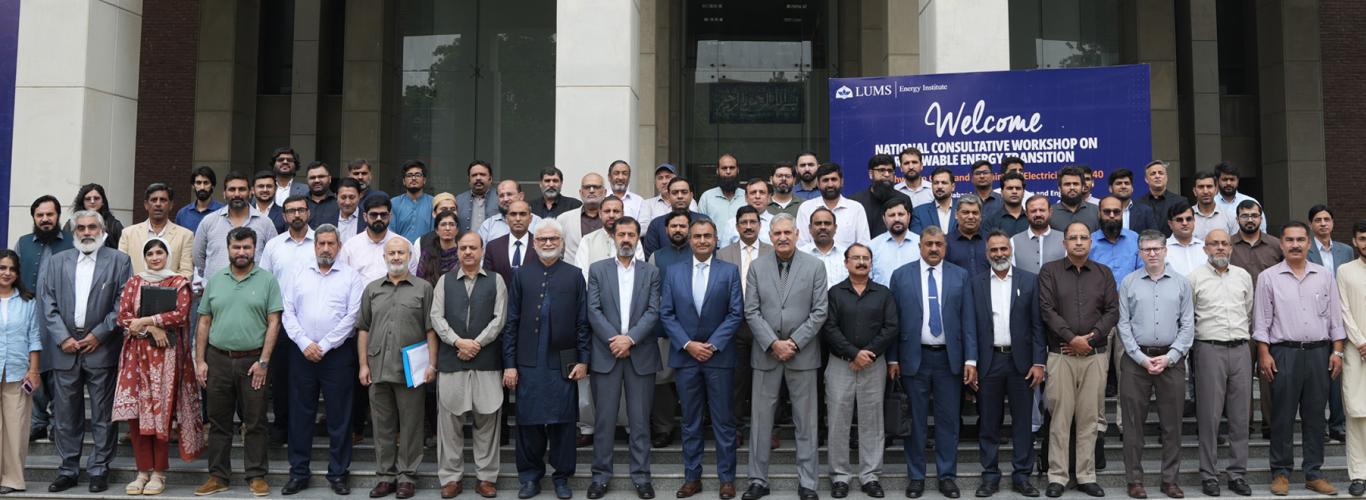


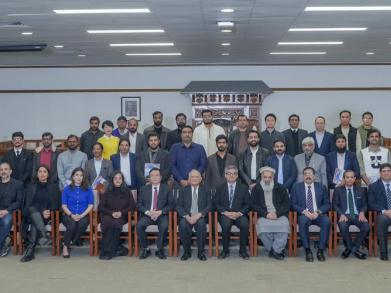
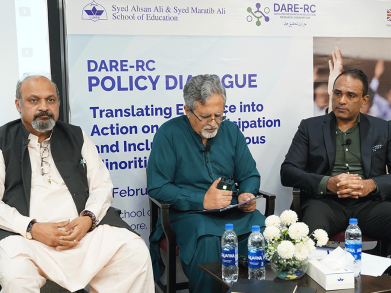
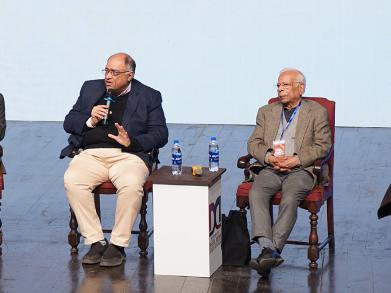
The LUMS Energy Institute (LEI) convened a National Consultative Workshop on Renewable Energy Transition to discuss practical pathways towards clean, affordable, and reliable electricity in Pakistan. Building on its report, The Net Zero Transition: A Pathway to Clean and Sustainable Electricity by 2040, the workshop brought together stakeholders from across the power sector to examine implementation priorities for a phased transition.
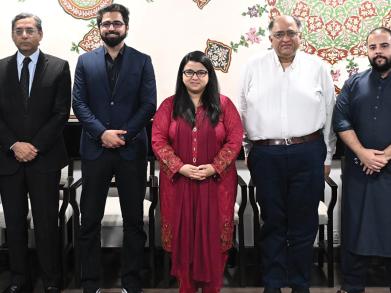
The consultation brought together representatives from the Ministry of Energy, National Grid Company (NGC), Independent System and Market Operator (ISMO), Water and Power Development Authority (WAPDA), GENCOs, Power Planning and Monitoring Company (PPMC), National Electric Power Regulatory Authority (NEPRA), Special Investment Facilitation Council (SIFC), Central Power Purchasing Agency (Guarantee) Limited (CPPA-G), as well as state-owned and private thermal power plants, equipment manufacturers, technology providers, academia, think tanks, and industry. LEI was represented by Dr. Salman Rafiq Chaudhary, Engr. Umer Farooq, Dr. Muhammad Uneeb, and Dr. Naveed Arshad.
The workshop identified five key implementation priorities: aligning renewable generation with transmission development; expanding energy storage and demand-side measures; strengthening grid flexibility; securing essential grid-support services; and establishing clear institutional responsibilities through a phased action plan.
A key area of discussion was the potential conversion of suitable thermal generators into synchronous condensers, where technically suitable and economically viable. Such conversions could enable existing infrastructure and grid connections to provide essential ancillary services, including dynamic reactive power support, system inertia, and short-circuit strength, as fossil-fuel-based generation declines.
Participants emphasised that any such conversion should be assessed against alternative solutions, taking into account performance, cost, location, delivery timelines, remaining equipment life, and contractual considerations. Thermal plant representatives and equipment manufacturers expressed interest in exploring potential conversion opportunities, while highlighting the need for plant-specific technical and economic assessments.
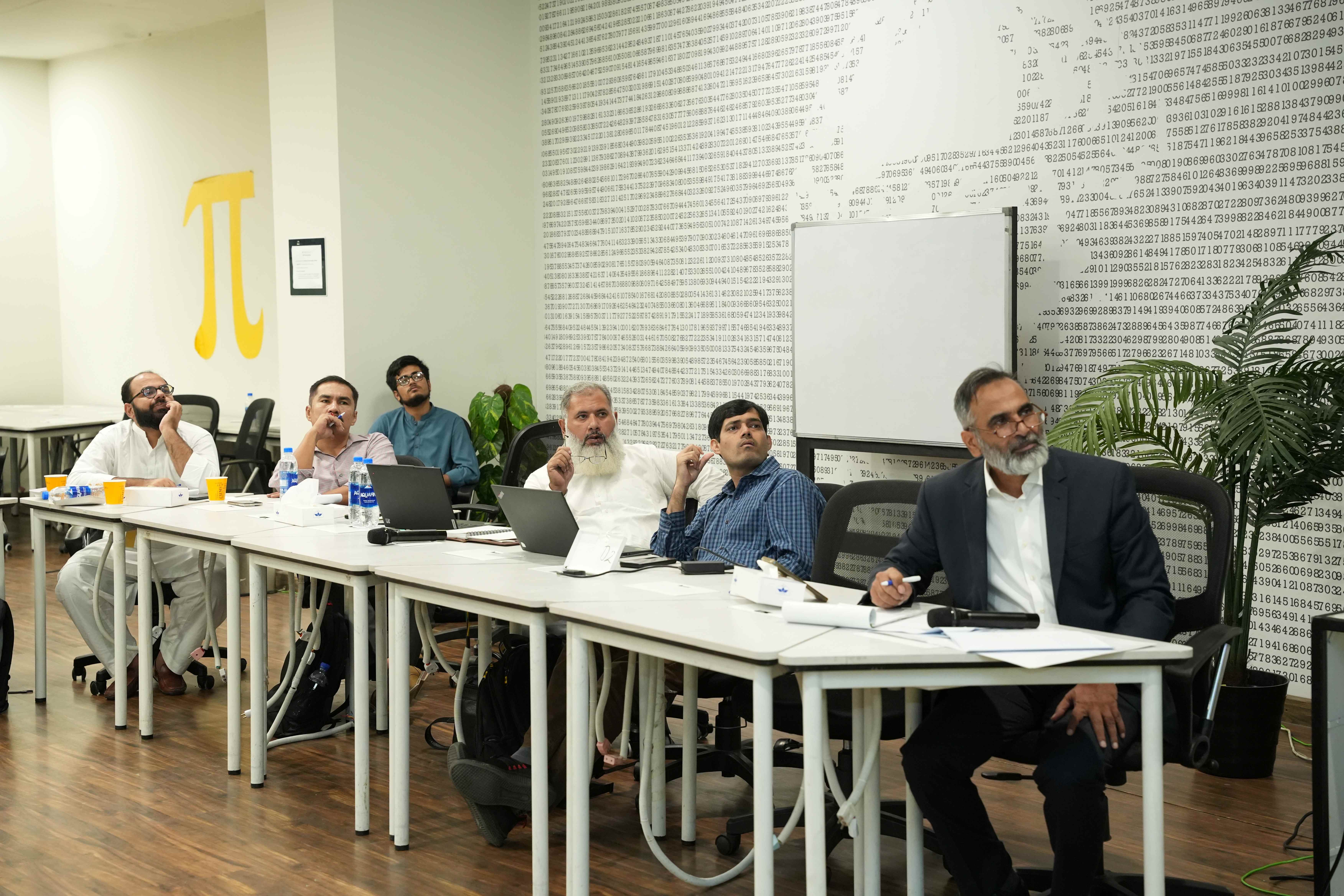
The workshop also focused on developing a technology-neutral framework for the procurement of essential grid-support services, allowing different technologies to compete on the basis of their ability to meet defined system requirements.
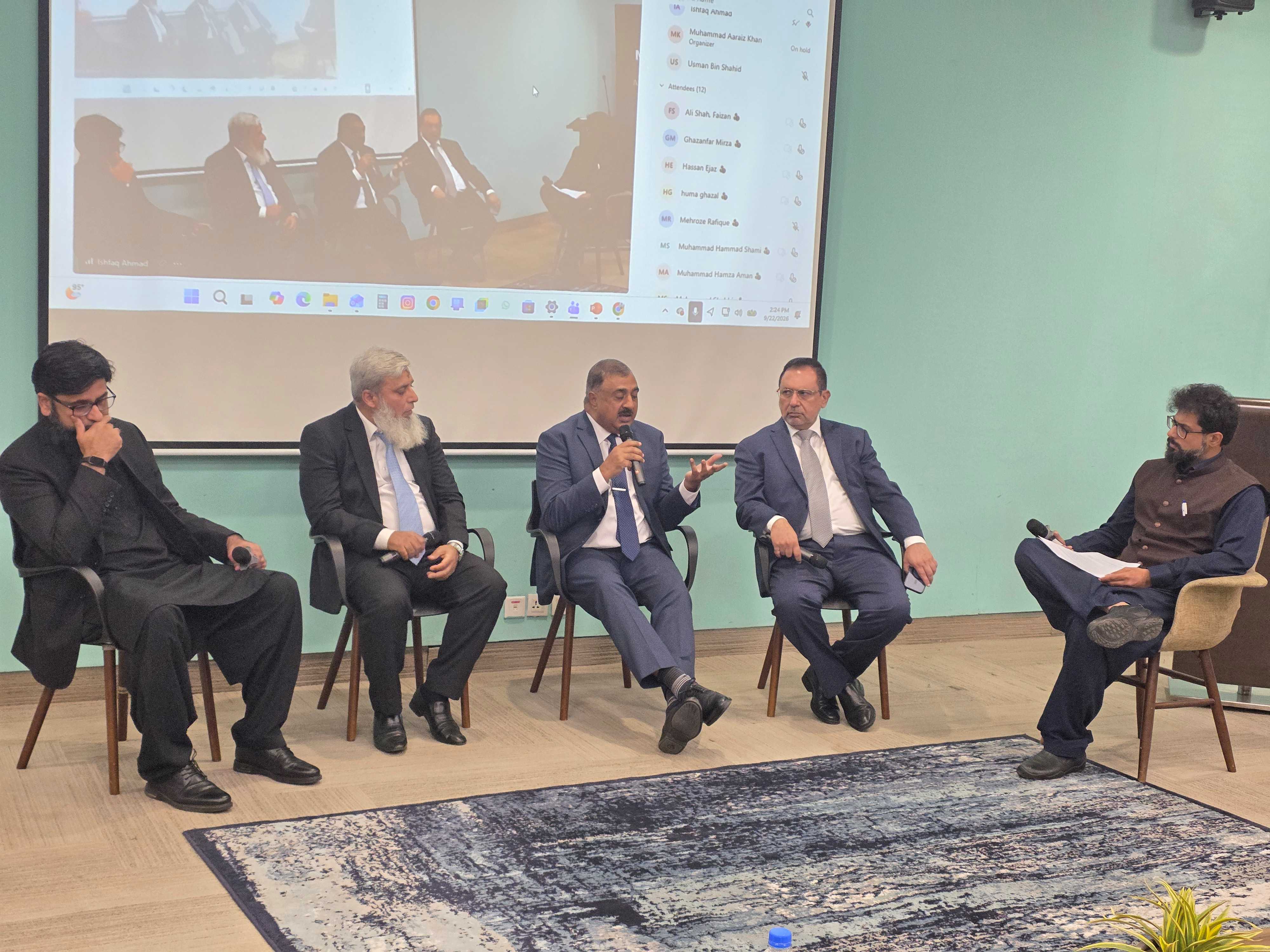
Syed Faizan Ali Shah, Advisor to the Minister of Energy, said, “The framework should be technology neutral and give equal opportunity to all technologies to provide ancillary services.” He also called for new and advanced technologies to be allowed to participate.
Engr. Altaf Hussain Malik, Managing Director, National Grid Company, highlighted the need for clarity on tariffs, licensing, performance and interconnection standards, and service valuation before investment. “We also need to assess the life-cycle cost and locational benefits of different options against the system’s requirements,” he said.
Abid Latif Lodhi, Managing Director, PPMC, called for ancillary services to be unbundled from energy procurement and opened to technology-neutral competition. “We need to establish the system requirement, assess plant-level feasibility and develop clear regulatory and commercial arrangements for their procurement and compensation,” he said.
Omer Haroon Malik, Executive Director, ISMO, noted that work was underway to develop a comprehensive framework for ancillary services alongside wider power-market reforms. “The objective is to establish the need for ancillary services and procure them through a competitive, technology-neutral process, whether the solution is a synchronous condenser, generator or another technology capable of meeting the required specifications,” he said.
Muhammad Arfan Miana, Member (Power), WAPDA, emphasised the importance of consumer affordability, noting, “We should be careful in setting the compensation mechanism based on availability and performance, rather than moving back towards earlier capacity-based models.”
The consultation also considered the implications for consumers. Participants noted that effective integration of renewable energy, supported by appropriate grid-support services, could contribute to a more reliable electricity system and reduce dependence on imported fuels. The potential financial benefits, however, would depend on the viability and costs of individual projects, as well as appropriate cost-recovery mechanisms.
|
|
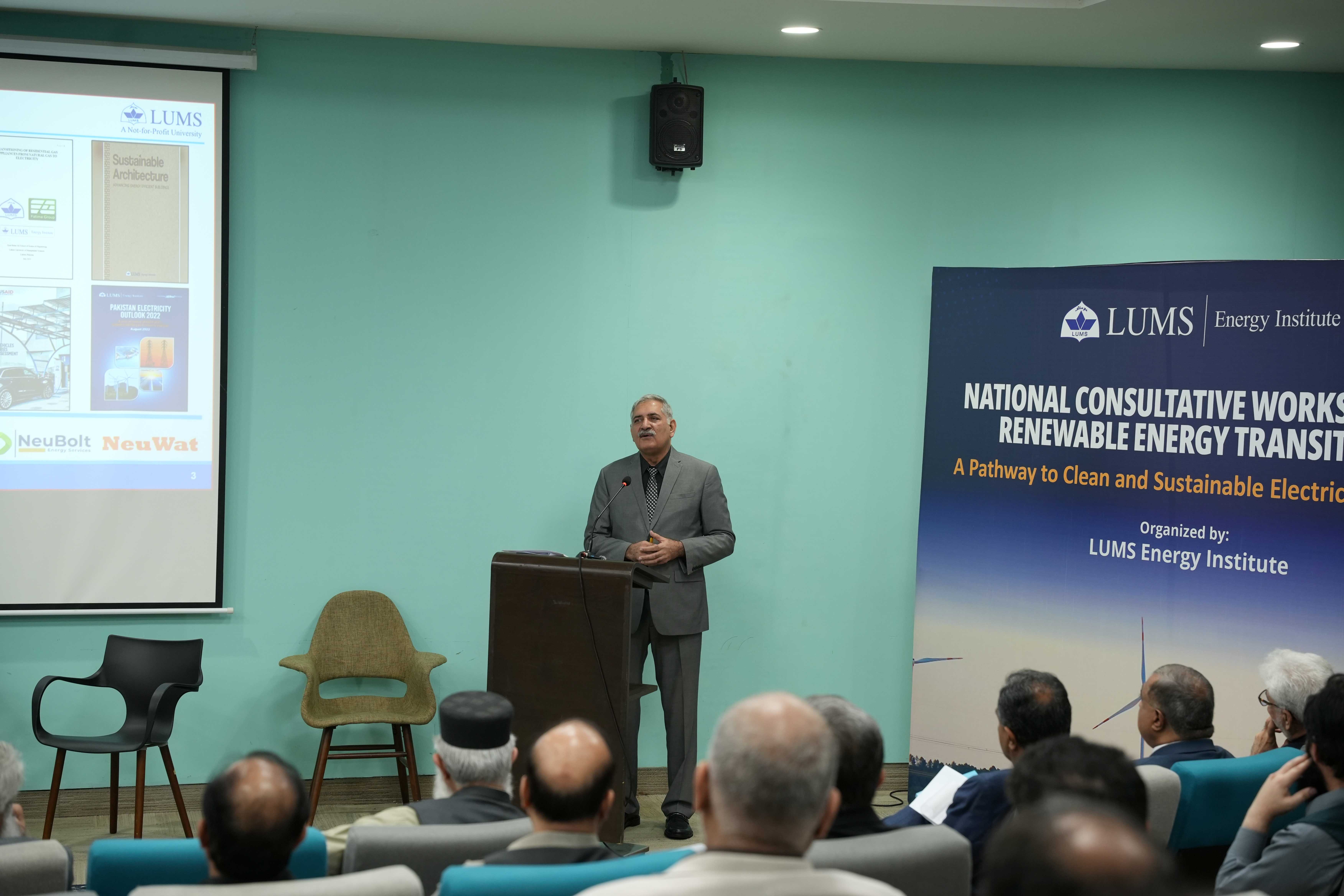
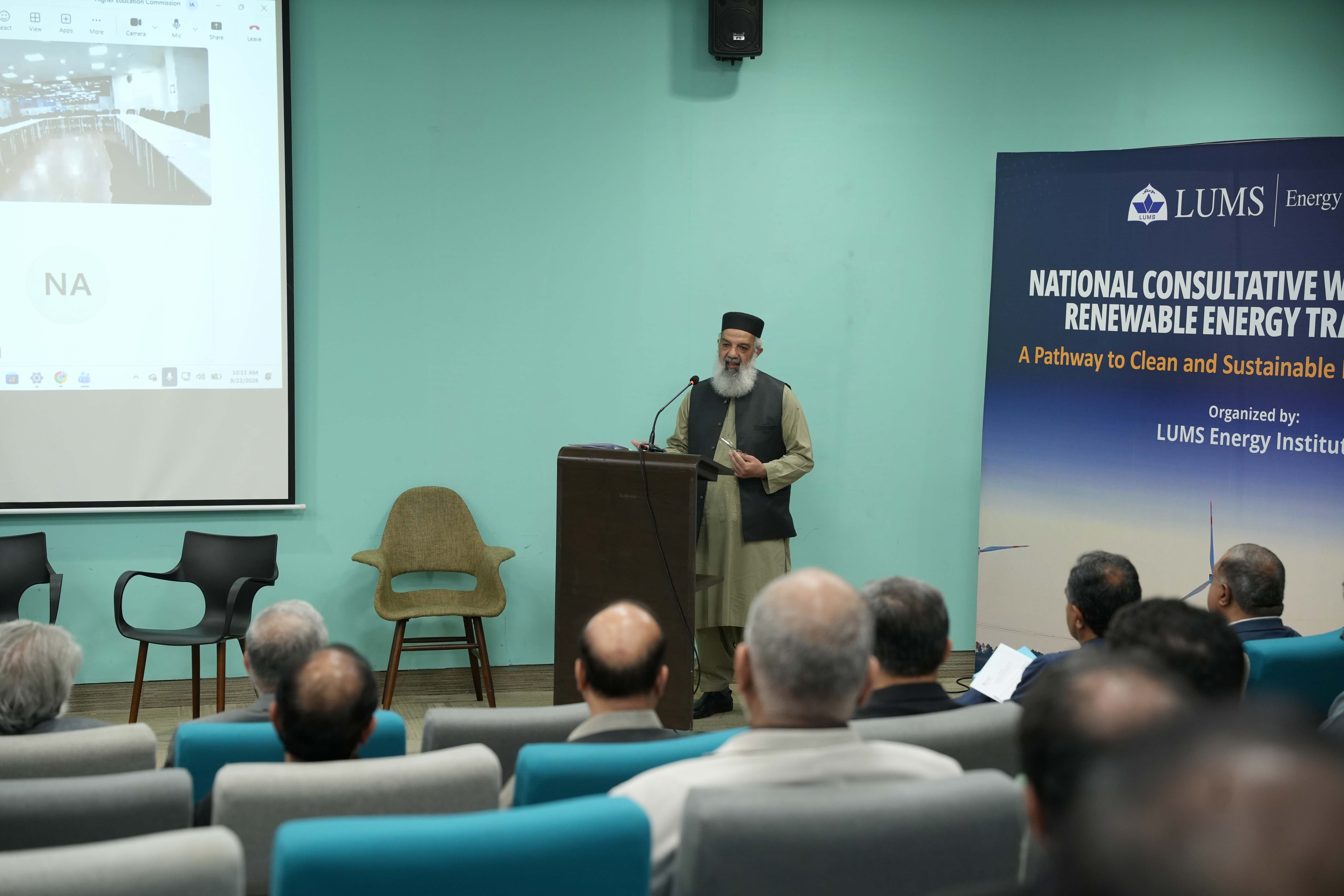
Dr. Fiaz Ahmad Chaudhry, Senior Advisor, LEI; Chairman, Board of Directors, National Grid Company; and Independent Director, ISMO, said, “This national consultation turns the findings of LUMS’ net-zero report into implementation priorities, with clear actions and responsibilities to advance the 2040 electricity pathway.”
Concluding the workshop, Dr. Tariq Jadoon, Provost, LUMS, thanked the participants for their contributions and said, “LUMS will continue working with government and industry to translate research into policy and practical solutions for affordable, reliable and cleaner electricity.”